 RESEARCHOpen ThesisMemo
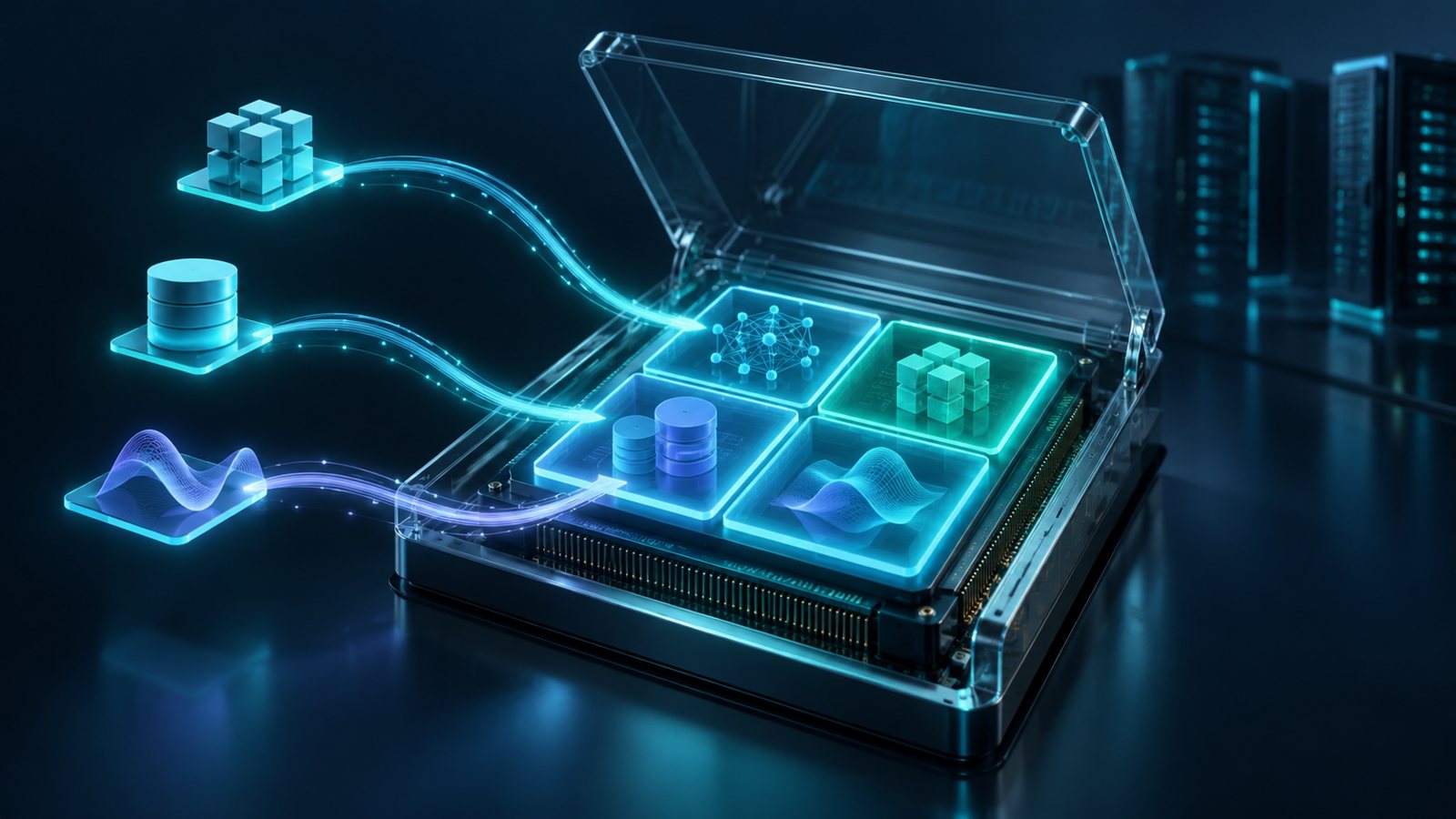
The release broadens access to GPU management
NVIDIA said on October 13 that the complete Run:ai platform is available as open source within its DSX AI Factory platform. The investment question is whether making GPU orchestration more accessible expands economically useful AI workloads. Publishing code establishes availability; it does not establish the size or profitability of the resulting business.
The change covers the integrated platform as well as modular components. NVIDIA also distinguishes the downloadable community product from its supported commercial offerings. The community product requires no paid Run:ai subscription or NVIDIA support entitlement, but it does not include NVIDIA enterprise support. Commercial distribution continues, with licensing and support varying by offering.
What the public repository actually provides
The Run:ai repository describes a platform that combines a central control plane with services inside Kubernetes clusters. Its capabilities include scheduling, team quotas, workload management, access controls and monitoring. The repository states an Apache 2.0 license for its code, while identifying separately licensed third-party material and reserving trademark rights.
That scope matters because managing a shared GPU fleet involves more than deciding where one job should run. Someone must define which teams can consume capacity, how priorities work and how operators observe the results. Run:ai supplies a management layer around those decisions. Its documentation explicitly says it does not replace Kubernetes, the container runtime or a continuous integration system.
For investors, this describes where software can become operationally useful. It does not demonstrate that a customer has completed installation, staffed operations or obtained a particular service guarantee. An accessible repository lowers one barrier while leaving deployment and operating responsibilities to be resolved.
Continue your research with ThesisMemo.
Explore NVIDIA research Free preview · No sign-up requiredNebius supplies a concrete distribution example
Nebius separately announced on October 13 that open-source Run:ai is available through Nebius AI Cloud Applications on its managed Kubernetes service. That is a more concrete adoption route than an unnamed future integration. It remains a provider announcement, rather than independently measured customer usage.
Nebius describes the intended setting as several teams sharing a cluster with uneven demand. Guaranteed quotas can coexist with borrowing unused capacity, and workloads can relinquish borrowed resources when their owners need them. This is a mechanism for reducing idle allocations, not evidence that every workload will run faster.
The distinction also separates product availability from financial contribution. A cloud application listing does not disclose active deployments, incremental customer spending or the provider's margin after operating costs. Those are different questions and require different evidence.
Efficiency can push hardware demand in either direction
Our interpretation is that better orchestration creates two competing effects for NVIDIA's hardware business. If customers can complete the same work with fewer reserved devices, near-term demand for additional GPUs could weaken relative to an inefficient baseline. If lower effective computing costs make more projects viable, workload growth could offset that saving or exceed it.
Neither outcome follows automatically from the release. The relevant comparison is total useful work and paid demand after adoption, with comparable service quality. A utilization percentage alone can be misleading: keeping devices busy is not necessarily the same as completing valuable work on time.
For a cloud operator, the corresponding question is whether shared capacity improves contribution after engineering, support and reliability costs. For NVIDIA, another question is whether community users later choose supported commercial products. The sources reviewed do not establish a conversion rate, incremental revenue figure or hardware-order effect for this release. Assigning one now would turn a distribution decision into an unsupported earnings estimate.
The evidence that would strengthen the thesis
The next useful disclosures would identify production customers, describe their workloads and compare outcomes before and after deployment. Investors should look for service quality alongside throughput, operating costs alongside utilization, and actual paid usage alongside installation counts. Each pairing helps distinguish an operational improvement from a promotional metric.
Evidence of sustained workload expansion or paid support adoption would strengthen the commercial case. Conversely, deployments that require substantial operating effort without better customer economics would weaken it. A growing community could still be strategically useful even if direct software monetization remains limited; that possibility should be evaluated separately from near-term earnings.
Run:ai's release therefore supports a narrower conclusion today: NVIDIA has broadened access to a substantial orchestration platform, and a named cloud provider offers a deployment route. Whether this produces more profitable AI infrastructure demand remains an open, testable question.
Keep following NVIDIA after this article.
Explore company insights, recent news and SEC filings in one place. Start with the free research preview and follow the original evidence.
Explore NVIDIA research Free preview · No sign-up required- NVIDIA: full Run:ai open-source release and distribution terms, October 13, 2026 ↗
- NVIDIA DSX AI Factory: public Run:ai repository and architecture ↗
- Nebius: open-source Run:ai availability in cloud applications, October 13, 2026 ↗
Research and education, not personalized investment advice. Facts and examples should be read in the context of their stated periods. Follow the original disclosures for the complete record.